 Bennett Lin
Overview
For my FRC team, I co-designed the ground intake system for our 2025 season robot. This system consisted of a 4-bar linkage to deploy and retract inside the frame perimeter, which my partner focused on while I focused on creating a smooth intake that could pick up game pieces (4.5”x11.875” PVC pipes) (GP) off the floor.
Prototype
Initial prototype focused on roller spacing to transfer GP over the bumpers. Back-bottom roller designed as an Archimedes screw to help orient GP perpendicular to intake. The screw was meant to twist the edge of the GP to an angle where the top rollers could make contact and orient it into the robot parallel with the indexer. Around 15 inches wide set in between our drivetrain.
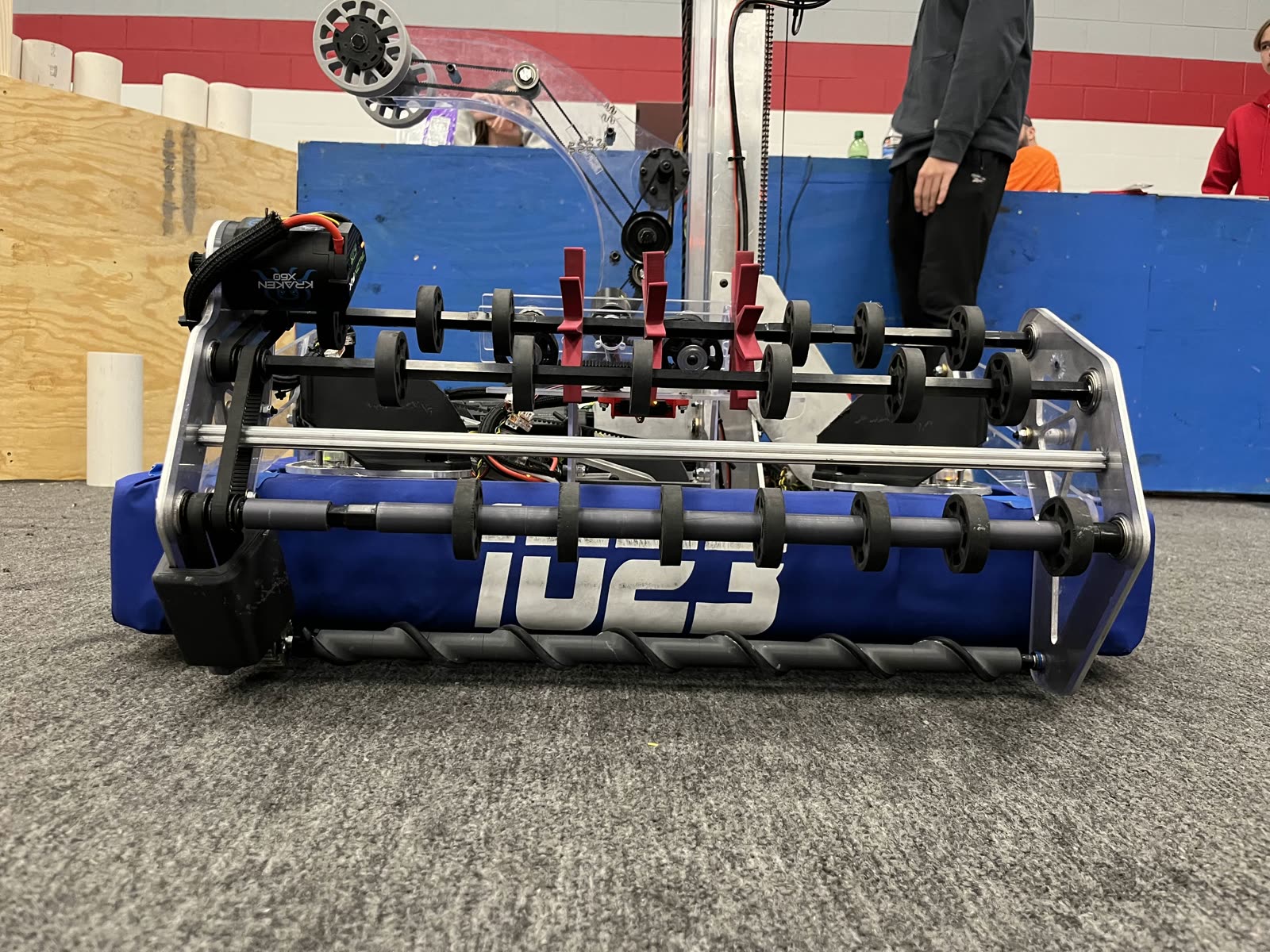
Intake Design V1
Design includes guide panels in the back with an Archimedes screw as the bottom roller to orient GP. Includes three star wheels at the scoring indexer to push the GP into it. Black compliant wheels for easy intaking with wheel spacing of 1.5" for the front roller to allow GP perpendicular to intake to orient itself when it contacts the screw roller.
Guide Panels V1
3D-printed panels mounted on the swerve modules after intake to push GP into the scoring indexer. The initial panel angles ran from the edge of the intake to the center of the indexer.
Notices
GP that collided with the intake side panels would go up the intake vertically, becoming jammed. Archimedes screw roller did not play a big role in orienting GP. GP also rode along the guide panels, which increased the time from intaking to indexing and slowed down our cycle times.
Guide Panels V2
Angled panels, 6" long by 3" wide, inserted inside the intake system. They kept GP from riding up vertically, and if one did, it rode up at an angle where the rollers could reorient it, preventing jams. The panels were designed to be bolted to the side panels, but 3M adhesive held them well and they never came off. However, the Archimedes screw roller made the intaking compression too tight.
Ramp
Removed the Archimedes screw roller and replaced it with a ramp: a Lexan polycarbonate arc set at an angle for compression, with wheels meant for touch-and-go intaking. This dramatically sped up the time from intaking to indexing. Included a teeth to help orient GP, later removed due to it digging into carpet, creating additional issues.
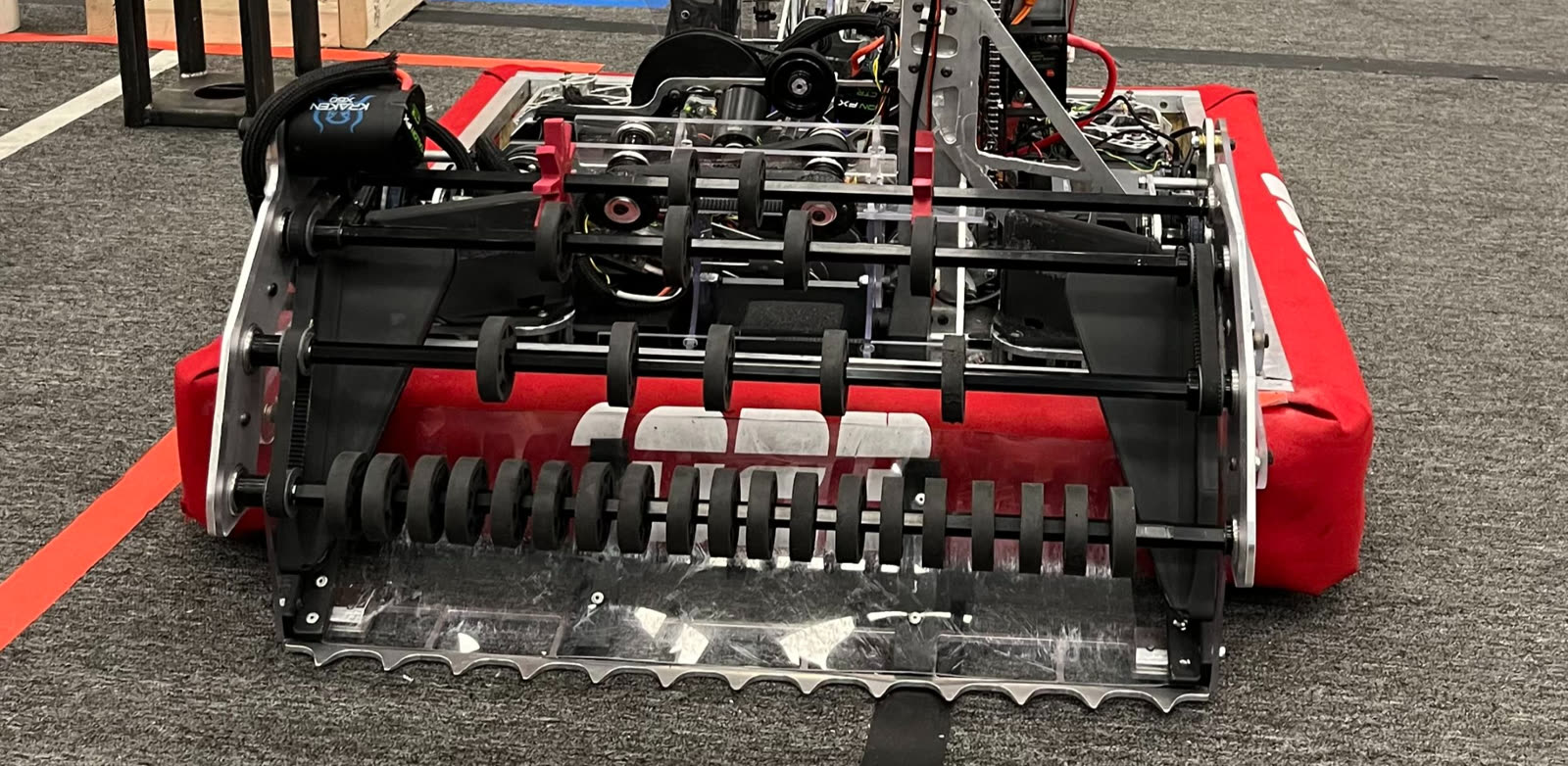
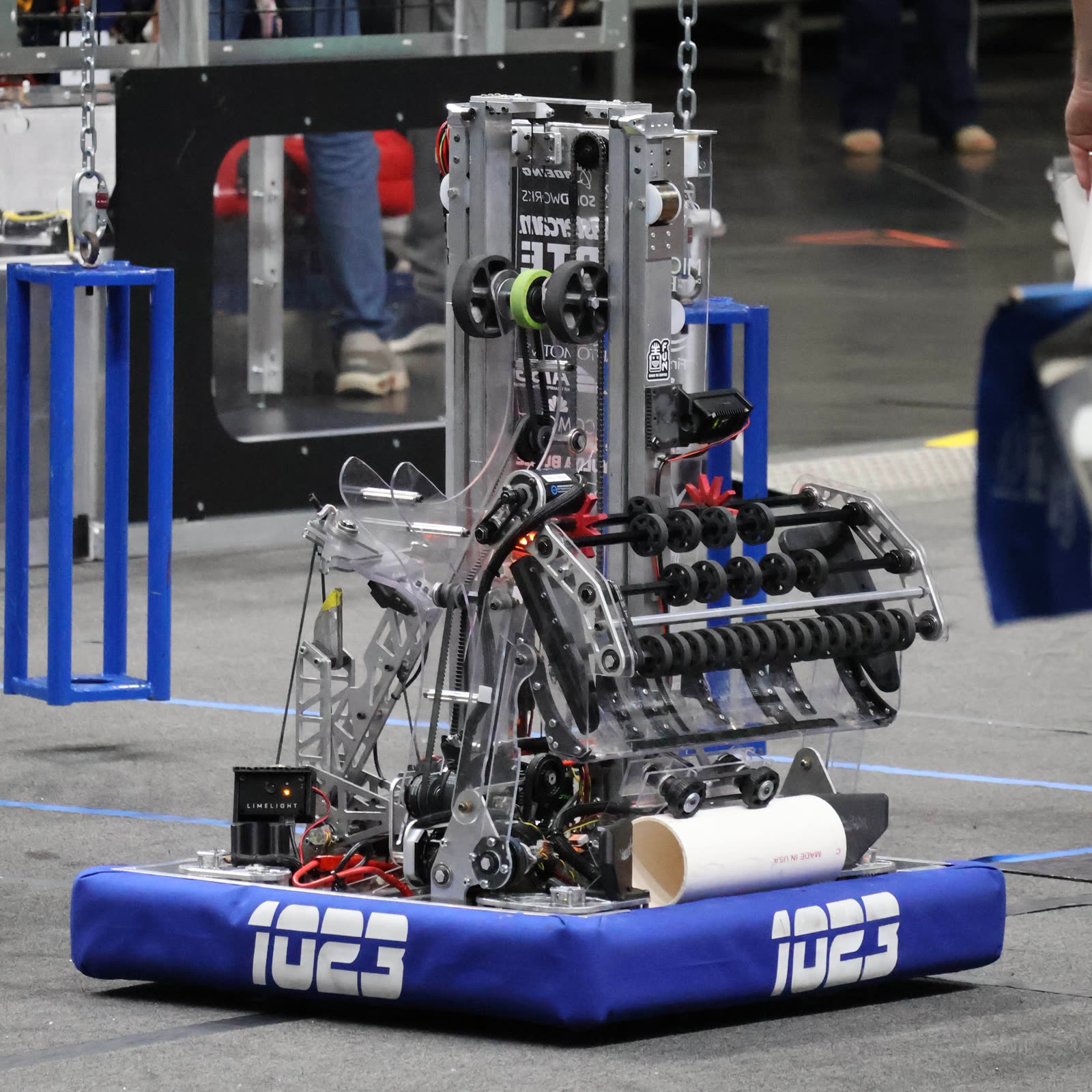
Intake Design V2
Version 2 replaced the bottom roller with a ramp. Included guide panels inside the intake system to orient the GP more smoothly, and more wheels on the front roller to ensure contact with the GP. This intake was faster and more consistent overall. It was a lot more durable and flexible than Version 1.
Electrical System
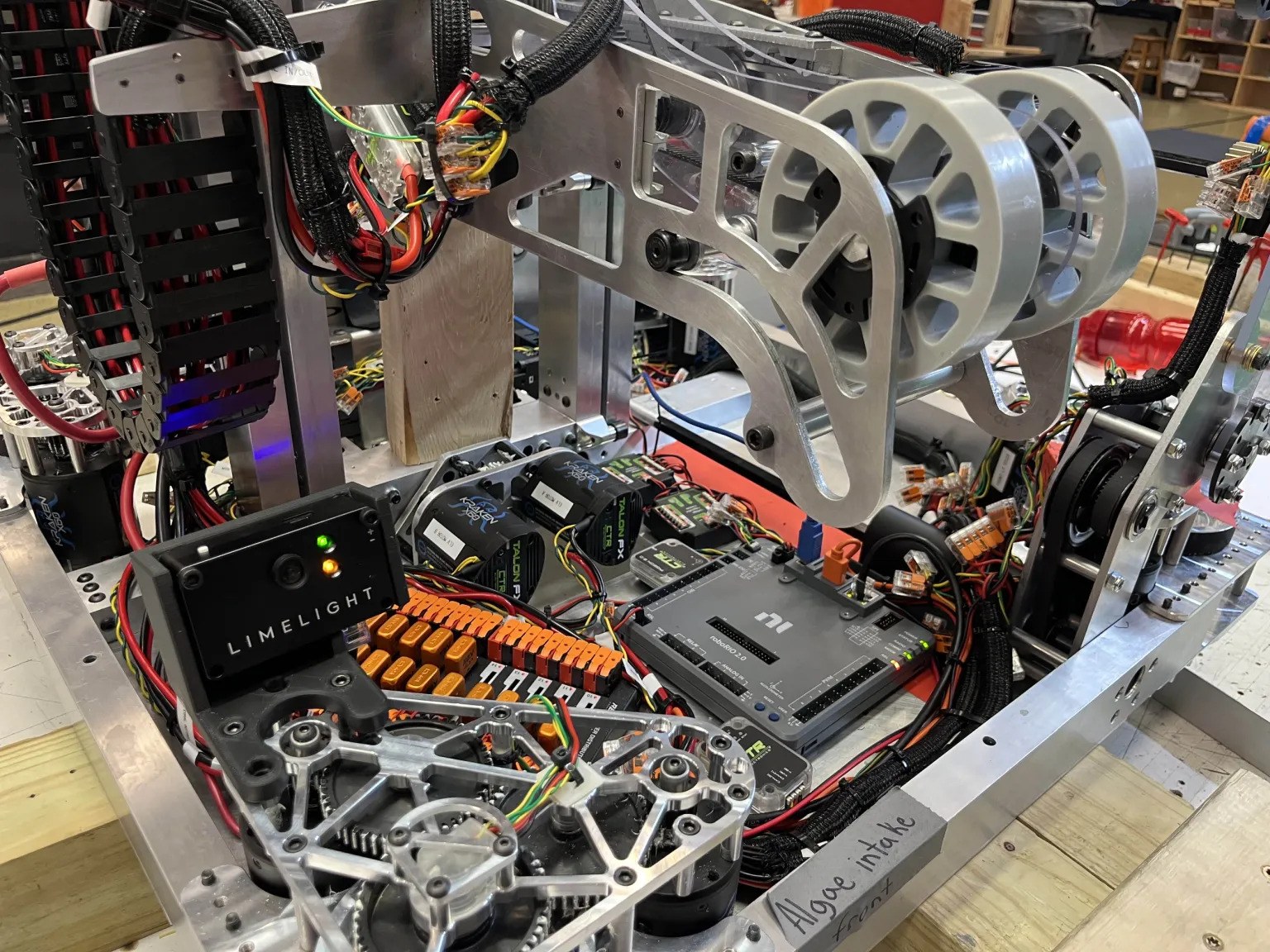
Optimized electrical component packaging and wire harnessing.
Split the CAN bus between the drivetrain and mechanical systems to ease troubleshooting and fault isolation.
Utilizes 3 voltage regulation modules for 2 Limelight perception cameras and the radio network.